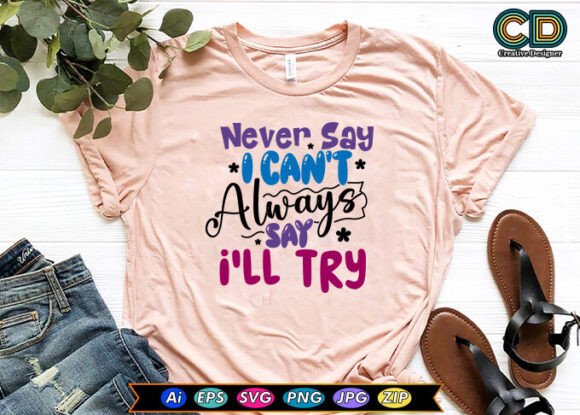
NEVER SAY I CAN T, ALWAYS SAY I LL TRY
As a designer who has spent years stitching custom pieces for clients and managing my own handmade shop, I approach every new embroidery file with a mix of excitement and skepticism. We have all been there: downloading a design that looks perfect on the screen but falls apart under the needle. That is why I recently put the NEVER SAY I CAN T, ALWAYS SAY I LL TRY digital asset to the test before adding it to my commercial collection. This isn't just another motivational quote; it is a statement piece that demands specific attention to layout, stitch density, and fabric choice.
The first impression of this design is one of quiet resilience. The typography carries a bold, confident personality that feels right at home on a variety of mediums. When I first opened the editable AI file, the spacing felt intentional. It does not scream for attention but rather invites the viewer to pause and read. For an embroidery project involving text, legibility is everything. This design avoids the common pitfall of overcrowding, allowing each letter to breathe while maintaining a cohesive block that works well as a chest logo or a central focal point on a garment.
Real-World Application: From Screen to Stitch
I decided to test this design in a scenario that mirrors what many Etsy sellers and small business owners face daily: creating a personalized gift for a client. My goal was to embroider a custom tote bag for a local teacher who was retiring. The phrase "NEVER SAY I CAN T, ALWAYS SAY I LL TRY" resonated deeply with her career, making it more than just a graphic; it became a narrative element of the product.
When loading the machine embroidery design into the hoop, the stability of the layout was immediately apparent. Because the text is arranged in two distinct lines, it fits perfectly within standard 4x4 and 5x7 hoops without needing excessive trimming. I chose a heavy-duty cotton canvas for the tote, which provided enough texture to make the satin stitch pop without distorting the fabric. The result was crisp, professional, and durable—a far cry from the wobbly text often seen on mass-produced items.
However, not every surface is created equal. While the design excelled on flat surfaces like aprons and pillow covers, I had to adjust my approach when considering curved surfaces like caps. On a structured baseball cap, the curvature can stretch the stitch density, potentially causing thread breaks if the design is too dense. In this case, the clean lines of the text held up well, but I would recommend testing on a scrap piece of denim or twill first to ensure the tension remains consistent across the curve.
Where This Design Shines
This Graphics category item is versatile, but it finds its true potential in specific niches. The motivational nature of the text makes it an ideal candidate for baby embroidery projects, such as onesies or nursery wall hangings. Parents love subtle messages that encourage growth and perseverance, and the font style here strikes a balance between playful and serious.
For holiday embroidery gifts, this design adds a personal touch that generic store-bought items lack. Imagine a set of kitchen towels embroidered with this phrase for a newlywed couple. The message speaks to the challenges of cooking together, turning a mundane household chore into a shared journey of effort. The included SVG file and EPS file allow you to resize the design effortlessly, ensuring it looks great whether it is printed on a small patch or scaled up for a large banner.
The high-quality JPG file is also invaluable for creating printable mockups. Before committing to production, I used the image to visualize how different thread colors would look against various fabric backgrounds. This step saved me time and prevented costly mistakes, proving that having multiple file formats is crucial for any digital product seller looking to maintain a high standard of quality.
Design Limitations and Practical Considerations
While this design is robust, no single asset is perfect for every situation. If you are working with thin fabric or highly stretchy materials like jersey knit, you must be cautious. Without proper stabilizer support, the tension required for clear lettering could cause the fabric to pucker or distort over time. Similarly, on dark fabrics, the contrast might be lost if you do not select the right thread colors. A light-colored thread on a black shirt will always struggle to maintain the same visual impact as a white-on-white or color-on-neutral setup.
Another area requiring careful judgment is the size of the final product. Attempting to stitch this design in a very small hoop, such as those used for tiny patches or jewelry tags, might compromise the clarity of the letters. The details in the serifs and the spacing between words need room to be executed cleanly. If the hoop size is too small, the machine may skip stitches, leading to a messy finish that undermines the professionalism of your handmade product.
Furthermore, consider the longevity of the item. For products that require frequent washing, like work aprons or children's clothing, the density of the fill stitches is critical. If the design is too sparse, the threads may pull out after a few cycles. Conversely, if it is too dense, the fabric may become stiff and uncomfortable. Always review the stitch density settings in your digitizing software to ensure the design matches the intended use of the garment.
Professional Tips for Success
To get the most out of the NEVER SAY I CAN T, ALWAYS SAY I LL TRY design, I strongly advise running a test run on scrap fabric before starting your actual project. This simple step allows you to check thread color contrast and inspect small details that might be missed during the initial setup. If you are planning to sell finished items, confirm the licensing terms associated with the commercial embroidery rights. Many designers assume they can sell anything they download, but some licenses restrict resale or limit the number of units you can produce.
When preparing your files, take advantage of the editable AI file to tweak the kerning or line spacing if necessary. Sometimes, a slight adjustment can make the difference between a good design and a great one. Also, remember to compare light and dark fabric backgrounds using your mockup tools. This helps you anticipate how the final product will look in real life, ensuring that your brand consistency remains intact across all your listings.
Ultimately, this design is a valuable addition to any crafter's toolkit. Whether you are creating custom apparel, tote bag designs, or personalized gifts, the versatility of this text-based artwork offers endless possibilities. By paying attention to the nuances of fabric, thread, and machine settings, you can transform a simple digital file into a cherished physical object that customers will love.
For those looking to elevate their craft business, understanding the practical limitations and strengths of a design is key. NEVER SAY I CAN T, ALWAYS SAY I LL TRY provides a solid foundation for building a reputation for quality and thoughtfulness. It is a reminder that behind every successful product is a designer who took the time to think through the process, from the initial concept to the final stitch.