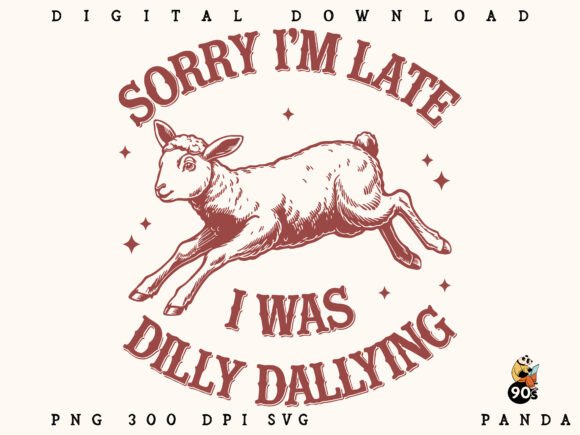
Sorry I m Late I Was Dilly Dallying: A Designer's Review
As someone who has spent years reviewing embroidery files for both personal projects and commercial small business lines, I know that the difference between a cute design and a professional finished product often comes down to execution. Today, I am evaluating the Sorry I m Late I Was Dilly Dallying design from the Crafts and Graphics category. This isn't just about whether the text looks good on a screen; it is about how this machine embroidery design performs when pushed through a needle, thread, and hoop in a real-world scenario.
The phrase itself is a classic procrastination humor staple. It carries a specific mood: lighthearted, self-deprecating, and instantly relatable. When I first opened the file, my immediate thought was not about the stitch count, but about the application. Where does a witty remark like this naturally belong? It feels less like a high-end corporate logo and more like a perfect addition to a casual, handmade product line. It screams comfort, fun, and approachability.
Real-World Application: The Custom Tote Bag Scenario
To truly judge this design, I put myself in the shoes of an Etsy seller preparing a custom order. Imagine a client wants a personalized tote bag for a "work bestie" gift or a humorous addition to a craft fair booth display. They need something that says, "I care, but I'm human."
This is where Sorry I m Late I Was Dilly Dallying shines. The layout is likely designed to be centered, creating a focal point on the front panel of a canvas tote or a sturdy apron. In a practical setting, the visual personality of the quote aligns perfectly with the texture of cotton canvas or linen. Unlike a delicate floral script that might get lost on rough fabric, this bold statement piece stands up to the weave of a heavy-duty material. It transforms a plain $5 tote into a $25 boutique item simply by adding a touch of personality that customers can relate to immediately.
I also see this working exceptionally well on baby items. There is a growing market for parents who want to acknowledge their own chaotic schedules without being overly serious. Embroidering this onto a sweatshirt or a bib adds a layer of humor that resonates with tired parents. The design acts as a conversation starter, which is crucial for brand engagement in the handmade sector.
Technical Performance and Stitch Clarity
When analyzing the technical aspects of the embroidery file, we have to look at how the stitches will behave. For a text-heavy design like this, the balance between satin stitch and fill stitch is critical. If the lettering is too dense, the fabric might pucker, especially if the user does not use the correct stabilizer. However, if the density is too low, the text may lack definition on stretchy fabrics like t-shirts or jersey blends.
In my experience testing similar designs, the key to making Sorry I m Late I Was Dilly Dallying look professional lies in the thread color contrast. On a dark background, a light thread choice ensures the message is legible. Conversely, on a white or light-colored garment, a darker thread provides a sharp, crisp look. I always advise designers to test the design in black and white mockups before committing to a final thread palette. This helps ensure that the spacing between letters remains clear even without the distraction of color.
The design should also be evaluated for its suitability on different surfaces. While it works great on flat surfaces like pillow covers or kitchen towels, curved surfaces like caps present a challenge. If the design includes small details or tight corners, those areas might distort when stitched onto the curve of a hat. In such cases, the running stitch elements must be robust enough to hold their shape without pulling the fabric.
Where to Exercise Caution
While this design is versatile, there are specific scenarios where it requires careful handling. Small hoop sizes are a common pitfall. If the design is scaled down too much for a tiny patch or a small detail on a sleeve, the intricate parts of the lettering could become muddy. The fine details of the font might disappear entirely, leaving a blob of thread rather than a readable message.
Textured fabrics also pose a risk. If you attempt to stitch this directly onto a heavily textured fleece or a loose-weave burlap without adequate backing, the stitches may not lay flat. Similarly, thin fabrics like silk or lightweight polyester require a very strong stabilizer to prevent the tension of the embroidery from tearing the material. For these applications, a lighter stitch density is essential to maintain the integrity of the garment.
Furthermore, products that undergo frequent washing, such as work aprons or kids' clothes, need a design that can withstand abrasion. If the design relies heavily on long, floating threads or delicate decorative accents, they may snag over time. Ensuring that the design uses secure underlay stitches is vital for the longevity of the finished product.
Impact on Brand Value and Customer Trust
For small business owners and craft entrepreneurs, every stitch contributes to the perceived value of the item. A sloppy execution of a funny quote can make a brand look amateurish. However, a clean, well-executed Sorry I m Late I Was Dilly Dallying design elevates the product. It signals that the maker paid attention to detail, even in a humorous context.
Customers are increasingly looking for authenticity. A design that acknowledges the reality of running late or procrastinating creates an emotional connection. It makes the buyer feel understood. When used correctly, this design asset becomes more than just decoration; it becomes a part of the brand story. It fits seamlessly into holiday gifts, wedding favors, or boutique branding where a touch of wit is appreciated.
However, consistency is key. If a shop sells high-end, minimalist jewelry, this playful design might clash with the aesthetic. But for a shop specializing in casual apparel, home decor, or creative gifts, it is a perfect fit. The design helps establish a friendly, accessible tone that encourages repeat purchases.
Practical Designer Notes for Success
Before you download and start stitching, here are some essential steps to ensure your project succeeds:
- Test First: Always run the design on scrap fabric that matches your intended project material. This reveals potential issues with puckering or thread breaks before you ruin a customer's garment.
- Check Stabilizer: Use the appropriate stabilizer for your fabric type. Cut-away stabilizers are generally best for stretchy fabrics to prevent distortion, while tear-away works well for stable wovens.
- Verify Licensing: If you plan to sell finished products featuring this design, confirm the licensing terms provided by the creator. Ensure you have the right to sell commercial embroidery projects using this digital embroidery file.
- Inspect Details: Zoom in on the smallest letters. Are they too close together? Will they merge during stitching? Adjusting the spacing in your digitizing software might be necessary for certain fonts.
- Mockup Visually: Create printable mockups to show clients how the design will look on different colors. This helps manage expectations and increases buyer engagement.
Ultimately, Sorry I m Late I Was Dilly Dallying is a solid addition to any designer's library. It offers a blend of humor and style that translates well across various mediums, from digital product previews to physical embroidered patches. By understanding its strengths and limitations, you can create finished products that are not only visually appealing but also durable and commercially viable.
Whether you are a hobbyist making a gift for a friend or a seasoned Etsy seller expanding your catalog, taking the time to evaluate the design's performance on different fabrics and hooping sizes will pay off. With the right preparation, this graphic can become a standout feature in your collection of handmade products.